All work
Naija Accountability
Designing a civic platform that makes governance legible to ordinary citizens
Naija Accountability
Naija Accountability is a Nigerian civic technology initiative built to strengthen public participation in governance. It gives citizens one place to find their elected representatives, rate their performance, track constituency projects, and report abuse of power.
It launched with no existing product and no existing audience. Everything had to be designed from nothing, for a public with wildly varying levels of digital literacy, on a subject most people have been taught to stay quiet about.
This one was not assembled on a website builder. Accounts, encrypted submissions, nightly score computation, and a searchable register of 403 officials are not things a template does, so the platform was built from scratch in code, with Claude in VS Code as the development environment.
Nigerians are not short of opinions about their leaders. What they have been short of is a place to put them that feels safe, credible, and worth the effort.
The brief was to design that place from scratch: a platform that communicates credibility on first sight, encourages participation without demanding expertise, and makes civic information findable by people whose only device is a phone.
Five barriers shaped the work. Citizens struggle to raise concerns without fear of being ignored or shut down. Reliable information about elected representatives is hard to come by. No central record exists for tracking government promises, projects, and progress. Reporting abuse of power is fragmented across places that do not talk to each other. And civic information, where it does exist, is written for people who already understand it.
Design had to solve for two things that usually pull against each other: enough authority that people trust the platform with a serious report, and enough plain language that a first-time visitor with no legal background knows exactly what to do.
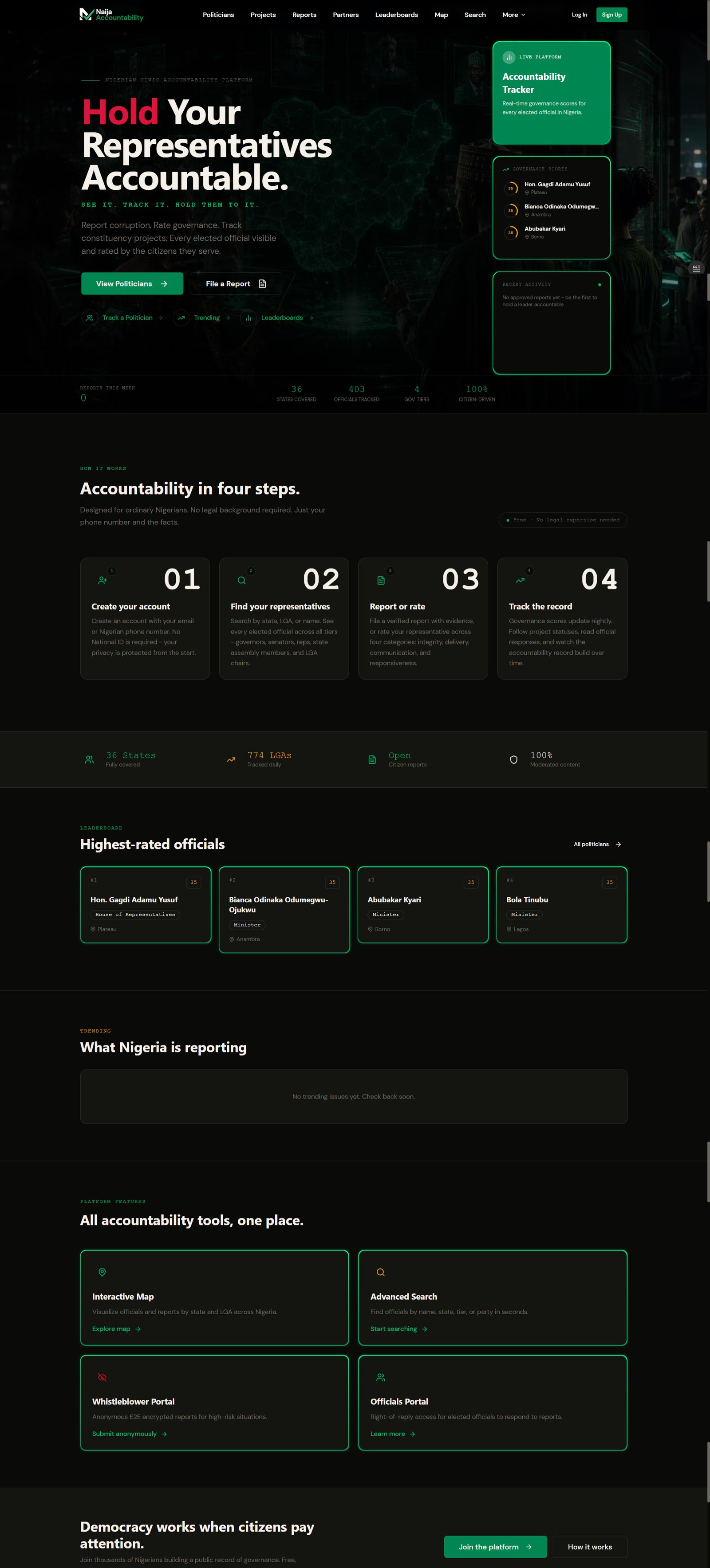
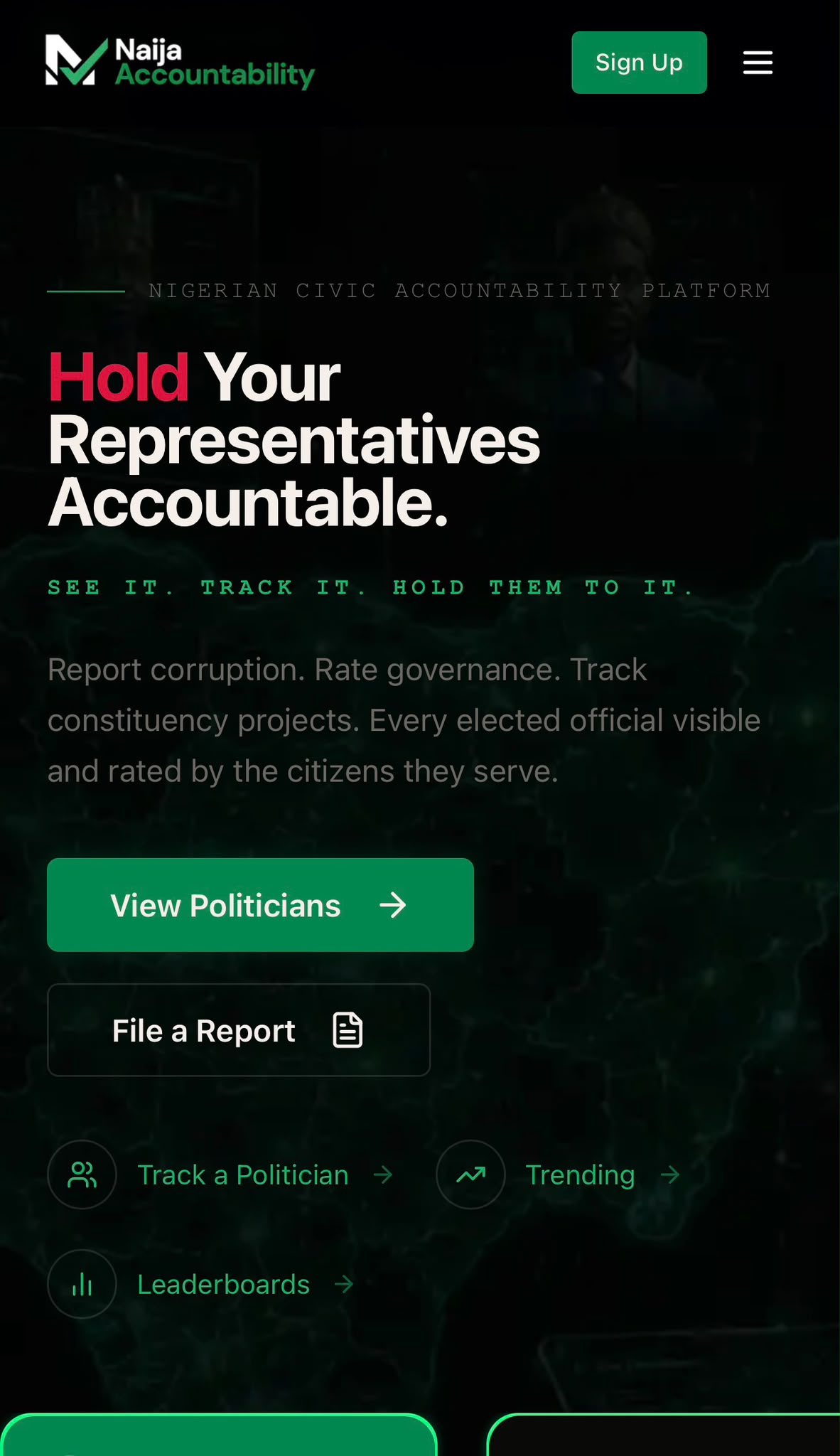
The homepage opens on four words that leave nothing to interpret: Hold Your Representatives Accountable. Underneath, the platform states its method in plain terms, See it. Track it. Hold them to it., then names exactly what it does: report corruption, rate governance, track constituency projects.
Two buttons follow, View Politicians and File a Report, because a visitor arrives either wanting to look something up or wanting to say something. There is no third state worth designing for on a first visit.
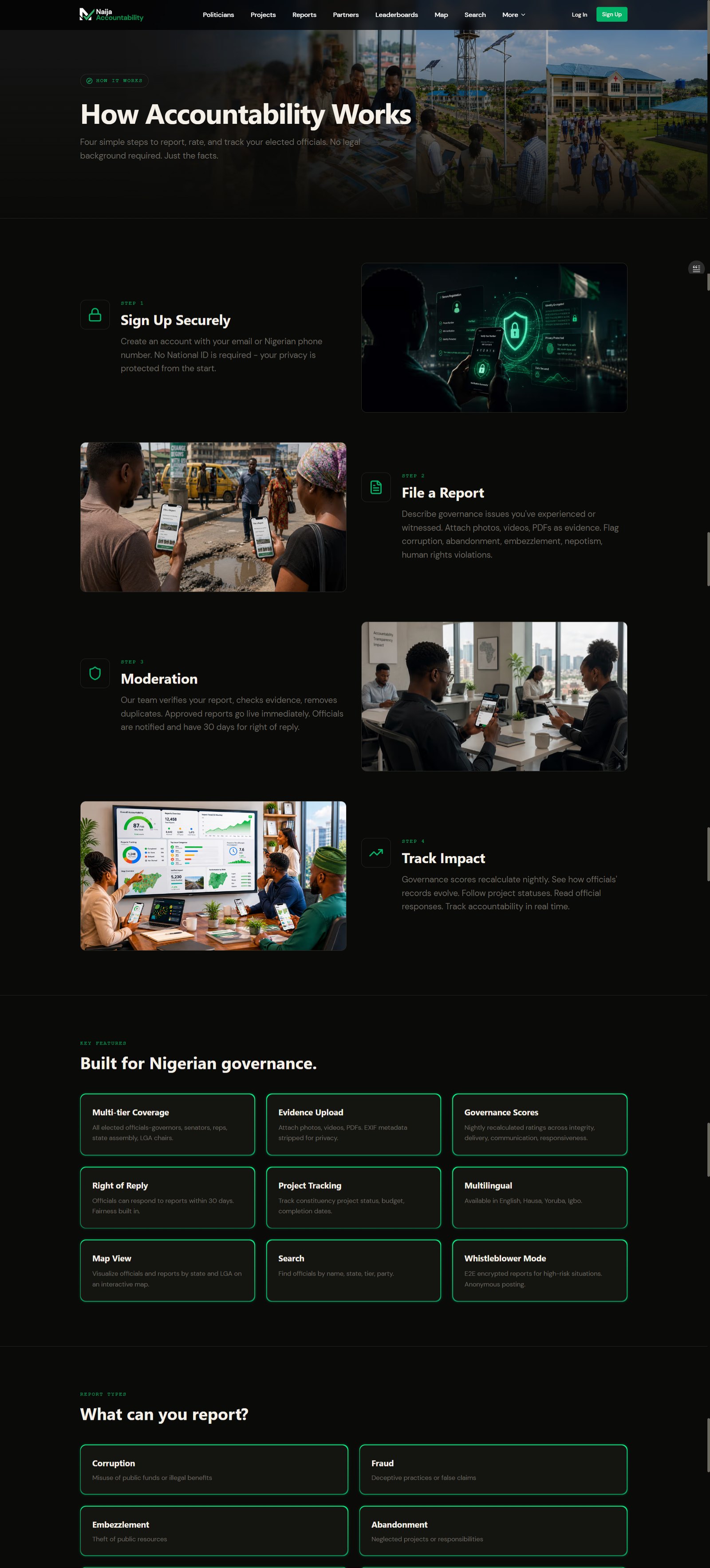
The single biggest barrier was not interest. It was people assuming this was not for them. So the process is spelled out on the homepage as four numbered cards: create your account, find your representatives, report or rate, track the record.
Each card answers the objection buried in the step. No National ID is required and your privacy is protected from the start. Every elected official across all tiers is searchable, from governors and senators down to LGA chairs. Reports are filed against four named categories rather than a blank box. Scores update nightly, so the record visibly builds rather than disappearing into a form.
A small line sits beside the section: free, no legal expertise needed. It removes the last excuse.
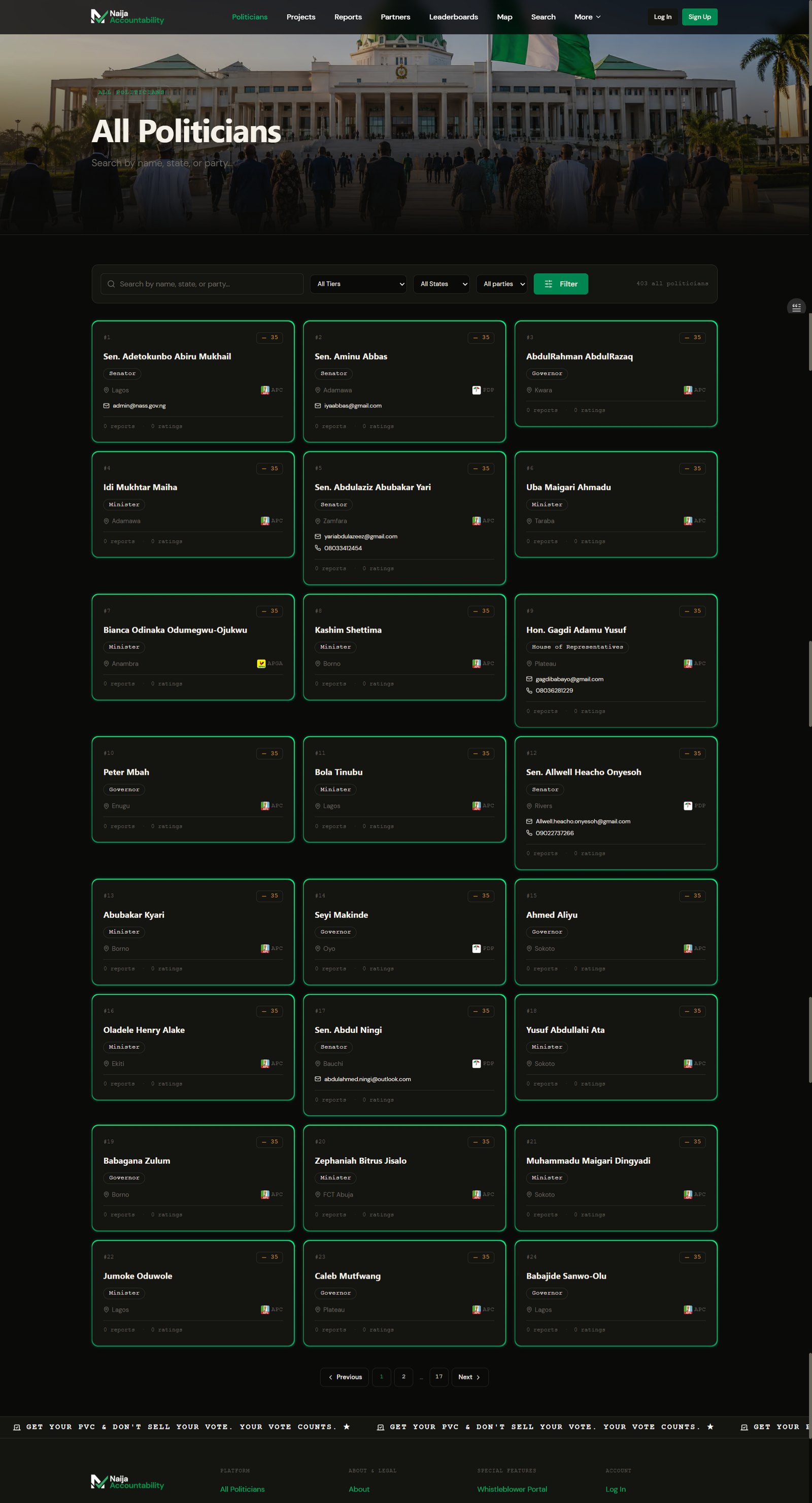
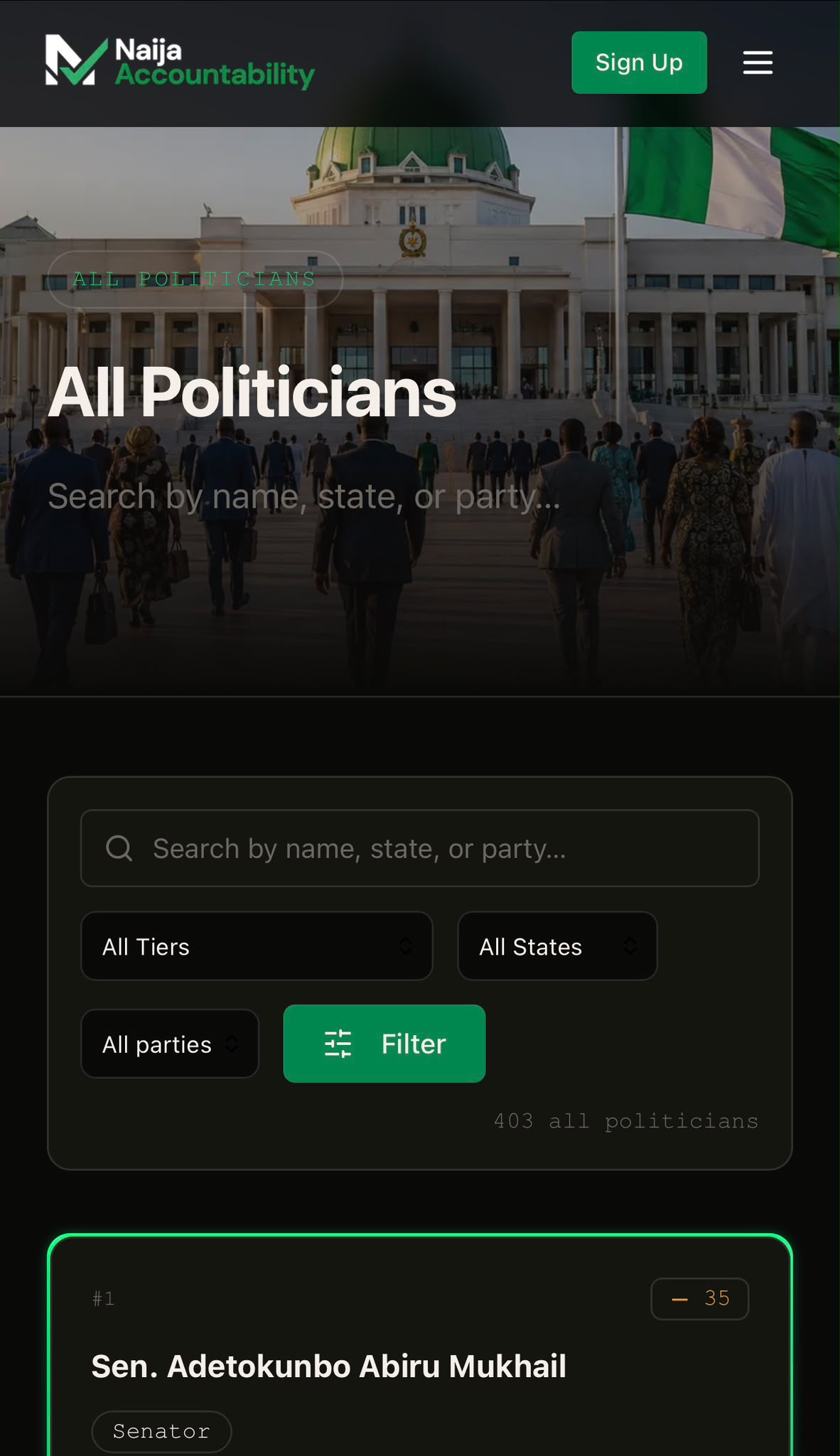
A directory this size is worthless if people cannot reach the one name they care about. The politicians index pairs free-text search with three filters that match how Nigerians actually describe their leaders: tier, state, and party.
Every card carries the same information in the same place. Rank, name, office, state, party, contact route, and the running count of reports and ratings. Consistency is what lets a citizen compare two officials at a glance instead of reading two pages.
Speaking publicly about power carries real risk. That fact shaped the interface rather than sitting in a policy page.
The Whistleblower Portal is a first-class feature on the homepage, described as anonymous and end-to-end encrypted for high-risk situations, not hidden in a submenu. Alongside it, the Officials Portal gives elected representatives a right of reply, which is what keeps the platform a record rather than a pile-on. Content moderation is stated openly at one hundred per cent.
Trust here is not a visual style. It is telling people what happens to them after they press submit.
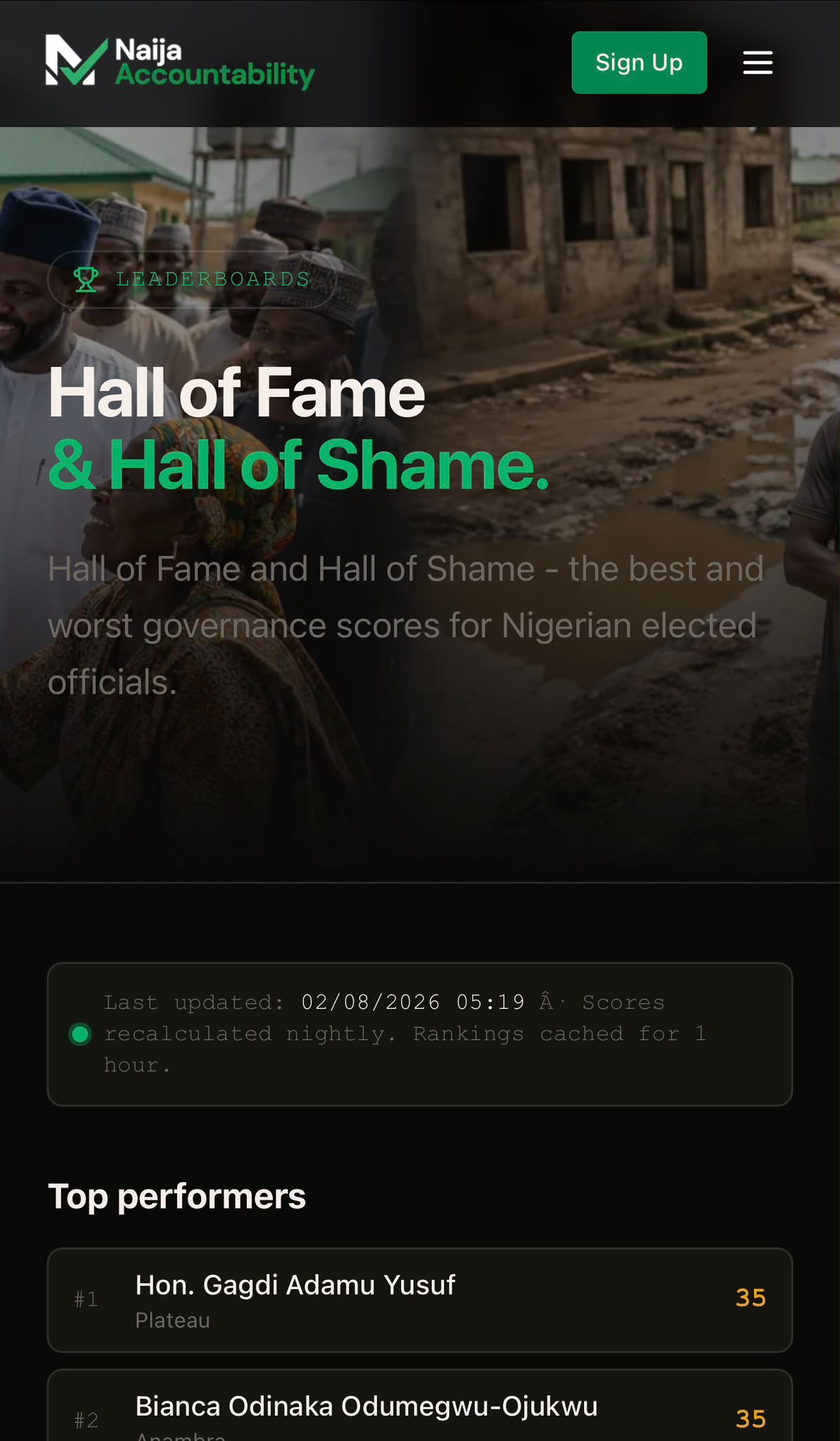
Nigerian green against near-black, with red reserved for the one word that carries the mission. The interface borrows the language of monitoring dashboards, monospaced labels, thin rules, live counters, because the platform is asking to be taken seriously as a public record.
It stays approachable through generous spacing and sentence-case headings, so the seriousness never tips into intimidation.
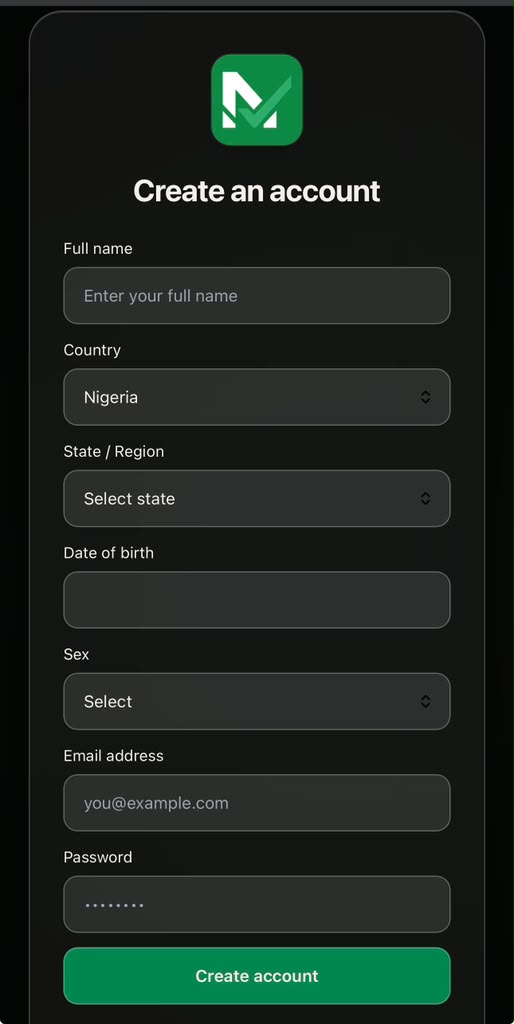
Most Nigerians reach the internet through a smartphone, so mobile was the design target rather than the adaptation. The hero holds its weight at phone width, the four-step explainer stacks without losing its numbering, official cards stay comparable, and sign-up runs in a single column with the keyboard in mind.
Civic technology fails when it looks either like a government form or like a protest poster. This had to sit between the two: credible enough to trust with a serious report, open enough that anyone feels invited.
Naija Accountability launched with national coverage from day one, which is what separates a civic platform people use from one they visit once and leave.
403
Officials tracked
Across four tiers of government, from ministers to LGA chairs.
36
States fully covered
Every state in the federation, searchable from launch.
774
Local government areas
Tracked daily, so accountability reaches past the capital.
Let's Connect
Make It Seen.
Platforms that ask people to take a risk have to earn it in the interface, not the about page. That starts with a conversation.